Blockchain introduces an immutable ledger that records each step of a product’s journey, enabling verifiable provenance and time-stamped data. Ledgers reinforce traceability, support data integrity, and reduce information asymmetry among partners. Smart contracts automate terms, cut manual delays, and deter fraud, while governance and data quality determine outcomes. Real-world deployments show measurable gains, yet results hinge on interoperability and ongoing auditing. The question remains: how to scale these mechanisms without compromising governance?
Why Blockchain Matters for Supply Chains
Blockchain matters for supply chains because it provides an immutable, time-stamped ledger that records every transaction and event across the network, enabling end-to-end traceability and increased data integrity.
A detached evaluation highlights how blockchain adoption reshapes risk, transparency, and collaboration, unveiling supply chain implications such as reduced counterfeits, streamlined audits, and data-driven decision-making while preserving flexibility and organizational autonomy.
How Ledgers Improve Traceability and Provenance
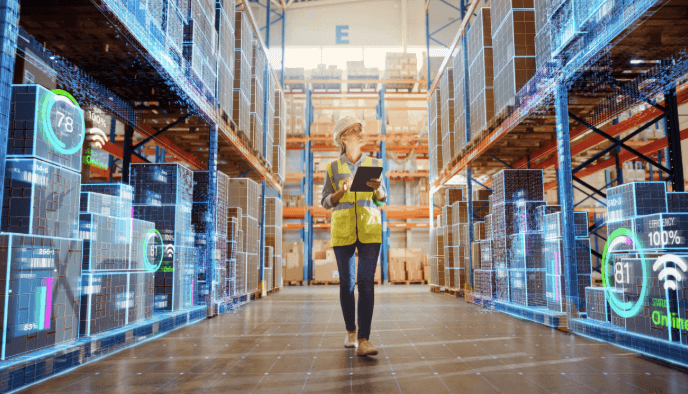
Ledgers enable precise tracking of each unit and event across the supply chain by recording time-stamped entries that are immutable and interoperable among participants. This structure supports systematic visibility, enabling assessment of traceability challenges and identification of root causes.
Provenance metrics quantify origin, custody, and transfer histories, facilitating data-driven risk assessments and performance benchmarking while preserving autonomy and operational flexibility across diverse stakeholders.
Smart Contracts: Reducing Fraud and Delays
Smart contracts offer a programmable layer that autonomously enforces agreed terms, reducing opportunities for fraudulent activity and minimizing processing delays. In auditing contexts, these mechanisms provide traceable execution logs, enabling fraud prevention through immutable records. Contract automation streamlines approvals, reduces manual handoffs, and lowers cycle times, while preserving compliance. Data-driven evaluation shows measurable efficiency gains without compromising governance or transparency.
See also: How Blockchain Technology Improves Record Keeping
Real-World Deployments and Measurable Gains
What concrete gains have real deployments yielded in practice, and how consistently do these gains materialize across industries? Early adopters report traceability improvements, inventory accuracy, and cycle-time reductions, though results vary by data quality and process maturity.
Global adoption accelerates standardization, while privacy concerns constrain data sharing. Measurable gains exist, yet replication requires tailored governance, robust interoperability, and continuous auditing across heterogeneous supply chains.
Conclusion
Blockchain-enabled supply chains deliver verifiable traceability, immutable provenance, and automated governance through smart contracts. Data-driven insights, real-time visibility, and reduced cycle times emerge when governance, data quality, and interoperability are aligned. While real-world deployments show measurable gains, results hinge on data integrity and stakeholder collaboration. In this landscape, blockchain acts as a compass, guiding decisions with trustworthy signals, and its benefits accrue as governance practices mature—like a lighthouse steadying ships amid fog.